Introduction: The Significance of Data Security
Imagine this scenario: your business has taken every precaution to protect its data. Firewalls, encryption, access controls—you name it. However, when it comes to translating your sensitive documents, you send them via email to an external language services provider. Suddenly, your data is beyond your control. This seemingly small step can create a gaping hole in your data security strategy.
We understand that your data is the lifeblood of your business, and we’ve designed our platform with this in mind. We’re here to explore the security measures that set us apart and give you peace of mind.
Comparing Taia to Traditional Language Service Providers
Traditional language service providers often rely on outdated methods. They receive your files via email, exposing your data to unnecessary risks. This method lacks the security and oversight required to protect your information.
Taia, on the other hand, operates on secure encrypted cloud storage. Your files are never sent to or stored on individual computers. Instead, they are processed within our highly secure cloud platform. It’s like the Fort Knox of language translation, providing you with an additional layer of data protection.
The Fortress of Taia: Layers of Security
At Taia, we’ve erected multiple layers of security, making our translation platform akin to an impenetrable fortress. These layers include:
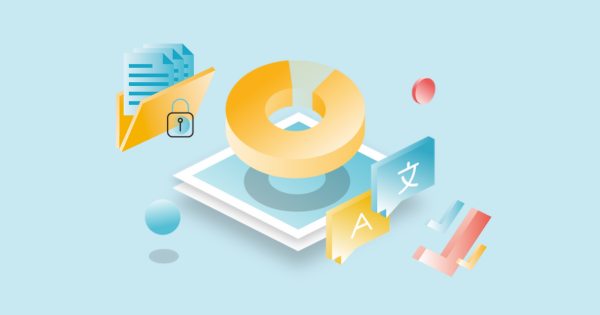
- SSL Encryption: All data transmitted to and from Taia is encrypted with SSL (Secure Sockets Layer) technology. This ensures that your data remains confidential during transit.
- Encrypted Data Storage: Your information is stored in secure, firewall-protected databases with advanced encryption. Even in the unlikely event of a breach, your data remains indecipherable.
- Seamless Data Backups: Our platform seamlessly clones and backs up your data, ensuring that it’s always accessible while being well-protected.
- Protection Against Threats: Taia is fortified against threats like bots and Distributed Denial of Service (DDoS) attacks. Your data remains safe from malicious activities.
Granular Access and Limited User Roles
We’ve implemented granular access controls within Taia. Language professionals, such as translators and proofreaders, have access only to the specific content they’re working on. This minimizes the chances of unauthorized access.
Furthermore, we’ve instituted features that restrict access to company users only. Your data remains within your organization, and you have full control over who accesses it.
Translating in the Cloud: A Game-Changer
One notable security advantage Taia offers is our integrated Computer-Assisted Translation (CAT) tool, which operates entirely in the cloud. While traditional providers send your files to translators, who work on them using their software and computers, Taia takes a different approach. Our translators work on your content within our secure cloud platform.
This means your files aren’t sent or stored on any external computer. Instead, they are processed within our secure environment. It’s a fundamental shift that ensures your data stays where it belongs—under your control.
Our comprehensive security features include:
- Cloud-based translation platform - No files sent to individual computers
- Translation Memory - Secure storage with enterprise-grade encryption
- Glossary management - Protected terminology databases
- AI translation - Processed in secure cloud environment
- Professional review - Translators work within platform only
- GDPR compliant - Full compliance with data privacy regulations
- ISO 17100 certified - Professional translation service standards
Conclusion: Trust in Taia’s Data Security
In a world where data is a valuable currency, you can’t afford to compromise on security. Taia offers a fortified fortress of security measures that safeguard your information from every angle.
By entrusting your translation needs to Taia, you not only benefit from cutting-edge AI and language services but also ensure that your data remains in the safest hands possible.
Your Data Deserves the Best Protection
Choose Taia
Create a free account here to experience secure, enterprise-grade translation.
Frequently Asked Questions
How does Taia protect my data during translation?
Taia employs multi-layered enterprise-grade security to protect your data throughout the translation process: Data in transit protection: SSL/TLS encryption for all data transmission (same technology banks use), End-to-end encryption between your browser and our servers, No data exposed during upload or download. Data at rest protection: Advanced encryption for all stored files and content, Firewall-protected databases with military-grade security, Automatic data backups with redundant storage systems, Encrypted Translation Memory and glossary databases. Cloud-based workflow security: Files never leave our secure cloud platform, Translators work within our translation management system (no downloads to personal computers), No email transmission of sensitive documents, Real-time collaboration tools eliminate insecure file sharing. Access controls: Granular permission systems (translators see only assigned segments), Role-based access for company team members, Two-factor authentication available for enhanced security, Activity logging for audit trails. Compliance and certifications: GDPR compliant (European data privacy regulations), ISO 17100 certified for professional translation services, Regular security audits and penetration testing, Data residency options for regulatory requirements. Traditional LSP risks (that Taia eliminates): Email transmission exposes files to interception, Translators download files to personal computers (uncontrolled environment), USB drives and local storage create data leakage risks, No visibility into who accesses your data when. With Taia’s secure platform, your data stays encrypted, controlled, and protected at every stage—from upload through AI translation and professional review to final delivery.
Is Taia GDPR compliant for handling sensitive European data?
Yes, Taia is fully GDPR compliant and designed to meet European data protection requirements: GDPR compliance features: Data minimization: We collect only data necessary for translation services, No unnecessary personal information stored, Automatic cleanup of completed project files (upon request). User rights supported: Right to access your data (download all your files anytime), Right to erasure (we delete your data upon request), Right to data portability (export Translation Memory, glossaries), Right to restrict processing (pause or limit data usage). Consent and transparency: Clear privacy policy explaining data usage, Explicit consent for data processing activities, Transparent communication about security practices. Data processing safeguards: Translation Memory and glossaries encrypted at rest, Secure cloud infrastructure in GDPR-compliant data centers, Subprocessors (translators) bound by confidentiality agreements, Data Processing Agreements (DPAs) available for enterprise clients. Security measures (GDPR Article 32): Encryption of personal data in transit and at rest, Regular security testing and vulnerability assessments, Access controls ensuring only authorized personnel handle data, Incident response procedures for data breach management. Data residency and localization: EU data residency options available for regulated industries, Data stored in secure European cloud infrastructure, No unauthorized cross-border data transfers. Accountability and documentation: Security documentation available to enterprise clients, Regular compliance audits and assessments, Designated Data Protection Officer (DPO) available for inquiries. Industry-specific compliance: Suitable for healthcare (patient data translation), Legal sector (attorney-client privilege preservation), Financial services (regulatory compliance translation), Life sciences (clinical trial documentation). Best practice for GDPR compliance: Use Taia’s platform instead of email for file transmission, Sign Data Processing Agreement for enterprise accounts, Enable two-factor authentication for additional security, Request data deletion after project completion if required. For detailed GDPR documentation or Data Processing Agreements, contact our compliance team to discuss your specific data protection requirements.
What’s the difference between Taia’s security and traditional translation agencies?
Taia’s cloud-based security far exceeds traditional agency methods: Traditional LSP approach (insecure): File transmission: Send files via email (unencrypted, easily intercepted), Files attached to emails stored on multiple mail servers, No control over who forwards or copies your documents. Translator workflow: Translators download files to personal computers (unknown security status), Work on local machines with potential malware, USB drives used to transfer files (easily lost or stolen), Files may be stored indefinitely on translator devices. Collaboration: Email chains with multiple recipients (data exposure multiplies), File versions sent back and forth (confusion, security risks), No audit trail of who accessed what when. Data retention: No clear deletion policies, Files may remain on translator computers forever, No way to verify data has been destroyed. Taia’s secure cloud approach: File transmission: Direct upload to encrypted cloud storage (SSL/TLS protected), No email transmission eliminates interception risk, Files never leave Taia’s secure infrastructure. Translator workflow: Translators work entirely within Taia’s platform, Files never downloaded to personal computers, Cloud-based CAT tool provides full translation functionality securely, Automatic logout and session timeouts for inactive users. Collaboration: Real-time collaboration within secure platform, Granular access controls (translators see only assigned segments), Complete audit logs show who accessed what and when, Version control built-in (no file chaos). Data retention: Clear data retention policies, Data deletion upon customer request (verifiable), Translation Memory and glossaries can be exported and purged, No residual data on external systems. Security comparison table: | Aspect | Traditional LSP | Taia Cloud Platform | |--------|-----------------|---------------------| | File transmission | Email (unsecure) | Encrypted cloud upload | | Translator access | Download to PC | Cloud-only workspace | | Data storage | Multiple computers | Centralized encrypted storage | | Access control | None | Granular, role-based | | Audit trail | No | Complete activity logs | | GDPR compliance | Difficult | Built-in | | Data deletion | Unverifiable | Guaranteed | Real-world security benefits: Risk mitigation: 90% reduction in data breach risk vs. email transmission, Zero data leakage from lost USB drives or stolen laptops, Complete visibility into data access (compliance requirement). Compliance advantages: Easier to demonstrate GDPR compliance to auditors, ISO 17100 certification validates security practices, Data Processing Agreements backed by verifiable security. Business continuity: Automatic backups prevent data loss, Disaster recovery built into cloud architecture, No single point of failure (translator’s computer crash = project delay with traditional LSPs). Bottom line: Traditional LSPs create security vulnerabilities every time they email your files. Taia’s cloud platform eliminates these risks with enterprise-grade security from upload to delivery. For sensitive documents (legal, medical, financial), cloud-based security isn’t optional—it’s essential.
Can I control who has access to my translation files?
Yes, Taia provides granular access controls so you maintain complete control over your data: Company-level access management: User roles and permissions: Admin users (full access to all projects and settings), Project managers (create projects, assign translators, view all content), Reviewers (review translations, provide feedback, no editing), Translators (access only assigned segments, cannot see full project), View-only (observers who can see progress but not content). Custom permission sets: Define exactly what each user can see and do, Restrict access to specific projects or content types, Control who can download files or export data, Limit Translation Memory and glossary access. Access control features: Segment-level security: Translators see only the specific sentences/paragraphs assigned to them, Cannot access other parts of the document, Cannot download complete files to their computers, Work entirely within Taia’s secure platform. Project-based restrictions: Assign translators to specific projects only, Rotate translators for different content types (technical vs. marketing), Confidential projects visible only to designated team members. Time-based access: Set project deadlines that automatically restrict access after completion, Temporary access for freelance translators (expires after project), Revoke access instantly when team members leave organization. Audit and monitoring: Activity logs show: Who accessed which files and when, What actions were taken (view, edit, download, export), IP addresses and device information for security monitoring, Translation Memory and glossary access history. Alerts and notifications: Suspicious activity flagged automatically (unusual access patterns), Login from new device or location triggers notification, Failed login attempts monitored for security threats. Data isolation for enterprise: Multi-tenant security: Your company’s data completely isolated from other clients, Dedicated Translation Memory and glossary databases, No cross-contamination of sensitive information, Private cloud environments available for regulated industries. Confidentiality enforcement: Non-disclosure agreements (NDAs) with all translators, Translators cannot copy/paste content outside platform, Screenshot and print restrictions available for highly sensitive content. Use cases for access control: Legal firms: Partner-level access to client files, Associates see only assigned cases, Translators access document segments only (no full file visibility). Healthcare: HIPAA-compliant access controls for patient data, Only certified medical translators assigned to healthcare projects, Automatic logging for compliance audits. Financial services: Board materials restricted to C-level users, Regulatory filings limited to approved translators, Audit trail for regulatory compliance verification. Best practices: Use role-based access (principle of least privilege), Regularly review and update user permissions, Revoke access immediately when employees leave, Enable two-factor authentication for admin accounts, Monitor audit logs for unusual activity. With Taia’s access controls, you decide exactly who sees your data—and have complete visibility into every access event. Sign up free to experience enterprise-grade access management.
How does cloud-based translation improve security compared to desktop CAT tools?
Cloud-based translation platforms like Taia provide superior security to desktop CAT tools: Desktop CAT tool security risks: Local file storage: Translators download complete files to personal computers (unknown security status), Files stored on local hard drives (vulnerable to malware, theft), USB backup drives easily lost or stolen, No centralized control over data location. Data leakage vectors: Files copied to personal cloud storage (Dropbox, Google Drive) by translators, Email attachments sent for review (data exposed in transit), Multiple file versions scattered across devices, Old project files never deleted from translator computers. No visibility or control: Client has zero insight into how files are handled, Cannot verify files were deleted after project completion, No audit trail of who accessed files when, Cannot revoke access to previously sent files. Vulnerability to threats: Malware/ransomware on translator’s computer can encrypt or steal your files, Unpatched software creates security vulnerabilities, No centralized security updates or monitoring, Computer theft or loss = data breach. Taia’s cloud-based security advantages: Centralized secure storage: All files stored in encrypted cloud infrastructure (not on individual computers), Translation Memory and glossaries in secure databases, No local downloads means no local security risks, Data backups automated and redundant (disaster recovery built-in). Work within secure environment: Translators access files through web browser only (nothing downloaded), Cloud-based CAT functionality equals desktop tools (no feature sacrifice), Files never leave Taia’s secure infrastructure, Automatic session timeouts prevent unauthorized access. Complete visibility and control: Audit trails: See exactly who accessed which files and when, Track all actions (view, edit, export), IP address logging for security monitoring, Compliance-ready activity reports. Access revocation: Instantly revoke translator access to projects, Remove data access when team members leave, Set expiration dates for temporary access, Cannot access old projects unless explicitly granted. Centralized security management: Automatic security updates: No need to patch individual translator computers, Security improvements deployed platform-wide instantly, Vulnerability fixes applied immediately across all users. Threat protection: DDoS protection prevents service disruption, Bot and brute-force attack mitigation, Real-time threat monitoring and response, WAF (Web Application Firewall) blocks malicious traffic. Enterprise-grade infrastructure: ISO 27001-compliant data centers, Multi-factor authentication available, Encrypted data transmission (SSL/TLS), Regular penetration testing and security audits. Compliance advantages: GDPR compliance: Easier to demonstrate data minimization (no unnecessary local copies), Right to erasure actually enforceable (delete from central system), Data Processing Agreements backed by verifiable security, Audit trails prove compliance. Industry certifications: ISO 17100 for professional translation services, SOC 2 compliance for cloud security (available), HIPAA-compliant configurations for healthcare. Business continuity: Disaster recovery: Cloud redundancy means no single point of failure, Automatic backups prevent data loss, Work continues even if translator’s computer crashes, Geographic distribution ensures uptime. Collaboration efficiency: Real-time collaboration (no file ping-pong), Translation Management System streamlines workflows, No version control chaos (single source of truth), Faster project turnaround. Cost and productivity: No expensive desktop CAT software licenses needed, Work from any device (computer, tablet) with internet, Automatic updates (no manual software maintenance), Scales instantly for high-volume projects. Bottom line: Desktop CAT tools create security vulnerabilities you cannot control. Cloud-based platforms like Taia provide enterprise-grade security, complete visibility, and verifiable data protection—without sacrificing translator productivity. For regulated industries (legal, medical, financial), cloud-based security isn’t just better—it’s essential for compliance.
What happens to my data after a translation project is completed?
You have complete control over your data retention with Taia: Default data retention: Active storage: Completed project files remain in your account (accessible anytime), Translation Memory continuously builds from completed projects, Glossaries persist for ongoing consistency, Access project history and previous translations indefinitely. Why we retain by default: Future projects benefit from Translation Memory (30-60% cost savings), Consistency across all your translations over time, Quick reference to previous work, Compliance with your brand voice and terminology. Data deletion options: On-demand deletion: Request deletion of specific project files anytime, We permanently remove files from our systems, Verifiable deletion certificates available for compliance, Typically processed within 24-48 hours. What can be deleted: Individual project source files and translations, Specific Translation Memory segments, Entire project history if required, Account and all associated data (account closure). What’s typically preserved (unless you request otherwise): Translation Memory (valuable asset for future work), Glossaries (your approved terminology), Account settings and preferences, Billing and invoice history (tax/accounting requirement). Automatic cleanup options: Project-based retention policies (enterprise feature): Set automatic deletion after 30, 60, or 90 days, Different policies for different content types (marketing vs. legal), Scheduled purges for regulatory compliance, Email notification before automatic deletion. Regulated industry configurations: HIPAA-compliant retention for healthcare (data purged after project + review period), Legal hold capabilities (preserve for litigation), Financial services compliance (audit trail retention requirements). Data export before deletion: You can export: All project files in original and translated formats, Complete Translation Memory database (TMX format), Glossary terminology (CSV, Excel, TBX), Activity audit logs for compliance records. Use cases: Migrate to another platform if needed (no vendor lock-in), Backup for your own records, Compliance audit documentation, Build institutional translation knowledge. Data deletion verification: How we prove deletion: Deletion confirmation email with timestamp, Activity log shows deletion event, Certificates of destruction available (enterprise), Third-party audits verify deletion processes. What deletion means: Files removed from production databases, Backups purged during next backup cycle (30-day maximum), No residual data in any Taia system, Irreversible process (cannot be undone). Security during retention: While data is stored: Encrypted at rest in secure cloud infrastructure, Access controlled by your permission settings only, Regular security audits and penetration testing, GDPR-compliant data protection measures. Geographic storage: EU data residency for European clients (GDPR requirement), US data centers for American clients, Data localization options for regulatory compliance. Best practices for data management: For ongoing clients: Keep Translation Memory active (compounds value over time), Maintain glossaries for consistency, Periodically review and clean old projects you don’t need. For one-time projects: Export Translation Memory after project (backup), Request deletion of source files (retain TM only), Use deletion certificates for compliance documentation. For regulated industries: Implement formal retention policies (aligned with industry regulations), Document data lifecycle in compliance procedures, Schedule regular data audits and purges, Maintain audit logs for regulatory inspection. Comparison to traditional LSPs: Traditional agency: No clear deletion policy, Files may remain on translator computers indefinitely, No way to verify data was destroyed, You have zero visibility or control. Taia: Clear retention and deletion policies, Verifiable deletion process, Complete control over what’s kept vs. purged, Transparency through audit logs. Bottom line: With Taia’s platform, you own your data and control its lifecycle. Whether you want to build long-term Translation Memory assets or comply with strict data retention regulations, you decide what happens to your content. Contact us to discuss data retention policies for your specific compliance requirements.
Localization Experts
The Taia team consists of localization experts, project managers, and technology specialists dedicated to helping businesses communicate effectively across 189 languages.