For years, the translation management system (TMS) was basically a digital filing cabinet — a place to upload files, assign translators, and wait. It worked, sure. But it moved at the speed of email threads and spreadsheets.
Not exactly built for the always-on, multilingual internet we live in now.
Today’s best translation management systems look nothing like that. They’re faster. Smarter. More connected. AI translation, automation, and human workflows now live under one roof — making localization smoother, more consistent, and (hopefully) a lot less chaotic.
Some platforms lean heavily into developer automation and complex localization pipelines — great for teams that need deep integrations across multiple systems. Others, like Taia, focus on flexibility: combining AI speed, translation memory, and professional human expertise in one intuitive platform that scales effortlessly from small projects to enterprise-level workflows.
The TMS didn’t disappear. It grew up.
And in 2026, the best ones don’t just manage translation — they drive global communication.
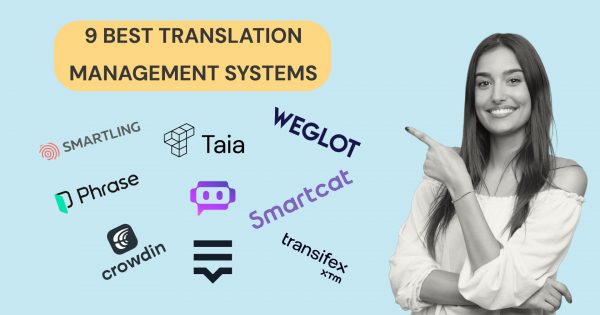
Here are the 9 best translation management systems leading that evolution this year.
What makes a great TMS in 2026
The best translation management software does a lot more than just organize text. They give you control, clarity, and scalability.
Here’s what actually matters when choosing one:
1. AI that works with you, not instead of you
Good AI speeds things up. Great AI learns from your brand’s terminology, tone, and past translations to deliver results that sound human — not machine-generated. Bonus points if it connects directly to your translation memory and glossary to stay consistent across every project.
Try Taia’s AI document translator
2. Built-in automation that saves real time
Look for automation that actually removes work, not adds another setup step. A strong TMS should handle file parsing, workflow routing, and notifications automatically — while still giving you full control over who does what and when.
3. Collaboration that keeps everyone in sync
The days of translators, reviewers, and PMs working in separate silos are gone. Your TMS should make it easy to comment, review, and approve content in real time — even across teams, languages, and time zones.
4. Transparent quality and cost control
The right platform gives you visibility — how much content is reused, what’s AI-translated vs. human-edited, and how that impacts your budget. No more guessing what you’re paying for.
5. Scalability and flexibility
Whether you’re translating product manuals, app interfaces, or marketing campaigns, a solid TMS should scale with you — from one market to ten, from small updates to global launches. That means wide file format support, API access, and role-based team management.
6. Security that doesn’t slow you down
Data protection isn’t a feature anymore — it’s table stakes. End-to-end encryption, access controls, and GDPR compliance should all come standard.
The 9 best translation management systems for 2026
1. Taia — Best for adaptive AI document translation that gets smarter with every project
If you want AI that doesn’t just translate — but learns — Taia is built for you. It’s a hybrid AI + human translation platform that combines speed, accuracy, and scalability in one place.
Best for: Teams that translate frequently and want to improve quality and efficiency over time — from individual users, to enterprise departments looking for a translation partner, to full in-house teams looking for the right translation ecosystem to work in.
Standout features:
- Adaptive AI translation that learns from your human translations, translation memory, and glossary — so results get smarter, more accurate, and more on-brand with every project
- Seamless switch between AI-only, AI + post-editing, or full human translation tiers (MTPE, T+R, or TEP)
- Team Management designed for individuals, agencies, and in-house teams — with shared billing, roles, and permissions
- Support for 65+ file formats and 189+ languages, with automatic file analysis and formatting preservation
- Role-based access control, end-to-end encryption, and full GDPR compliance
Why it stands out:
Taia evolves with you. Start with fast AI document translation, and as you review or order human services (MTPE, revision, proofreading), the system keeps learning — improving consistency, terminology use, and tone across every project. Over time, your AI becomes fully personalized, allowing you to translate more confidently, faster, and often completely AI-first.
Free plan: Yes — includes 5,000 words and 15 languages per month (Try it out here)
Paid plan starts at: $10/month
2. Smartling — Best for enterprise translation management and global scale
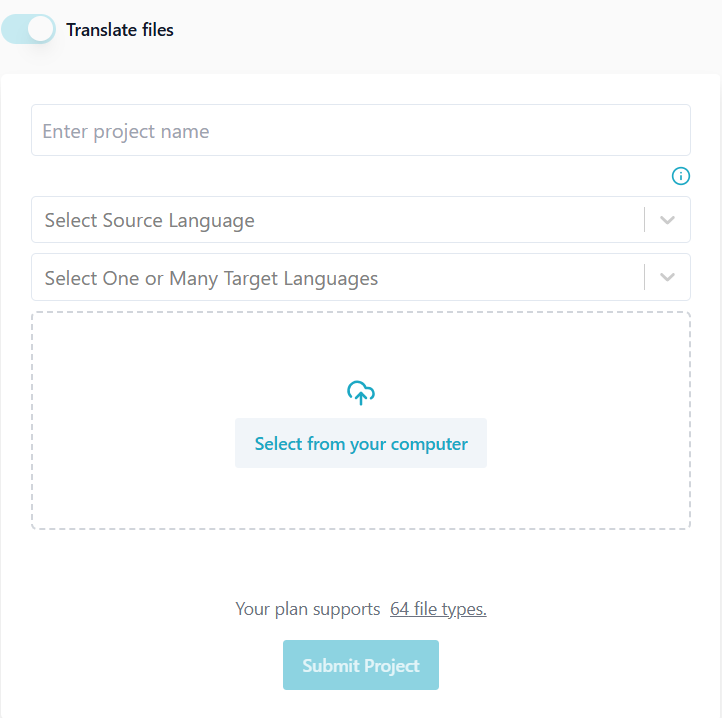
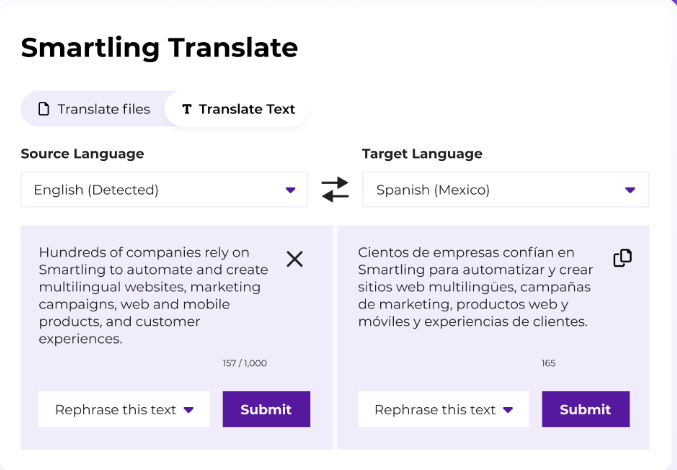
Smartling is one of the biggest translation management tools — built for large enterprises that handle massive multilingual content pipelines. It’s packed with automation features and powerful integrations, making it ideal for teams that run localization at scale.
Best for: Enterprise teams managing high translation volumes with complex workflows and multiple content systems.
Standout features:
- Extensive automation and workflow orchestration for large-scale localization
- In-context translation for websites and apps, giving translators live visual previews
- Advanced integrations with CMS, Git, marketing automation, and support tools
- Robust API and webhooks for continuous localization
- Enterprise-level security, SSO, and analytics dashboards
Why it stands out:
Smartling is built for scale — from global brands translating across dozens of markets to teams that need seamless integration with their existing tech stack. It offers impressive translation workflow automation and visibility, though smaller teams may find it overpowered for simpler projects.
Free plan: No free plan; demo available on request
Paid plan starts at: From ~$0.0075/word for AI; $0.12+/word for AI + human
3. Lokalise — Best for developer-friendly continuous localization
Lokalise is a go-to translation management system for software teams. It’s designed to fit naturally into developer workflows, supporting agile, continuous localization through powerful integrations and automation.
Best for: Product and engineering teams that need to ship multilingual updates fast — without breaking release cycles.
Standout features:
- Tight integrations with GitHub, GitLab, Bitbucket, and major design tools
- Real-time string management for apps, games, and web platforms
- Built-in API, CLI, and SDKs for automation and CI/CD pipelines
- In-context editing to translate directly within app interfaces
- Role-based access, QA checks, and version control for smooth collaboration
Why it stands out:
Lokalise makes localization feel like part of development — not an afterthought. It’s built for agile releases, supporting product teams that need speed, precision, and integration depth. While it’s ideal for dev-heavy workflows, non-technical users may find the interface a bit technical.
Free plan: Yes, with limited features
Paid plan starts at: $120/month
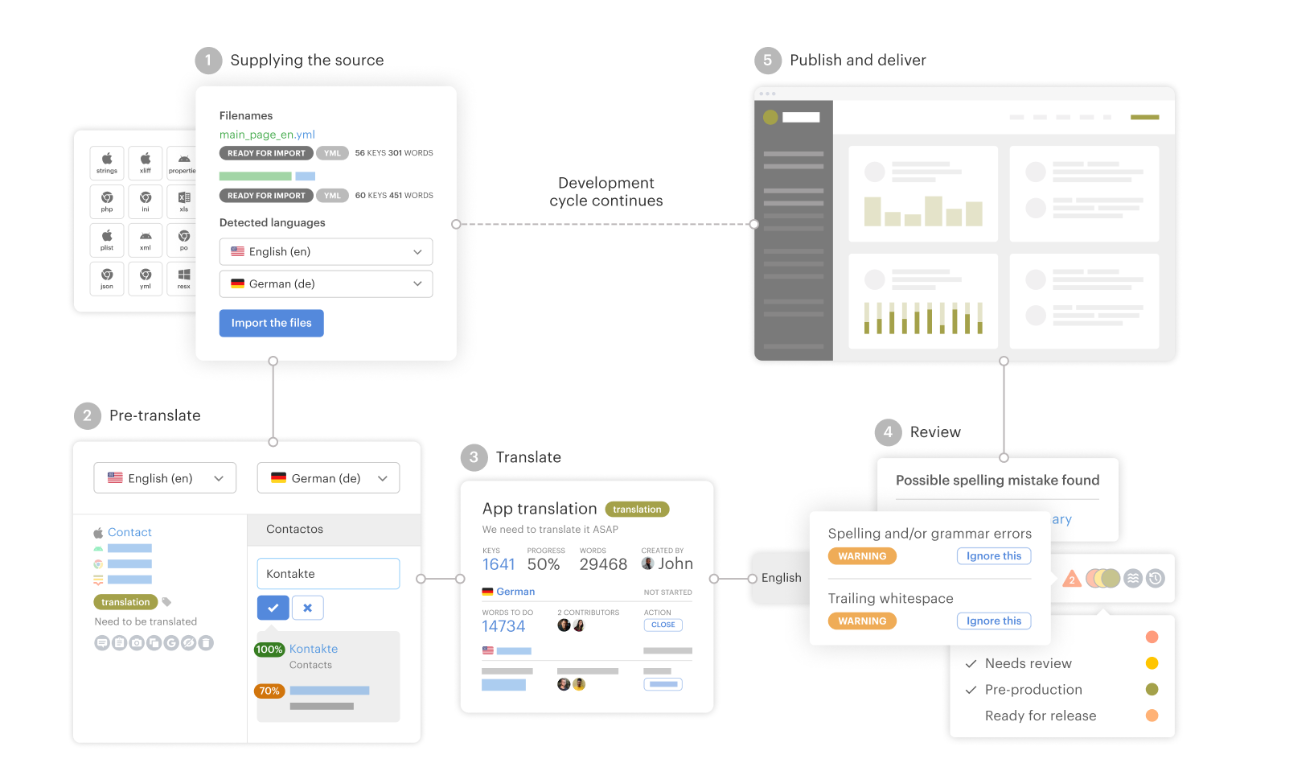
4. Phrase — Best for large-scale, code-integrated localization
Phrase (formerly PhraseApp, now part of the Phrase Suite including Memsource) is an advanced translation management platform built for enterprise-level automation. It’s especially popular among software and product teams that manage multilingual content directly within their code and design environments.
Best for: Enterprise and development teams running continuous localization workflows across multiple systems.
Standout features:
- Robust workflow automation through Phrase Orchestrator
- Deep integrations with developer and design tools like Git, Figma, and Contentful
- Centralized translation memory and terminology management for consistency
- In-context translation for UI strings and software elements
- Advanced analytics for quality, speed, and cost tracking
Why it stands out:
Phrase excels at handling complex, code-integrated localization projects. Its automation and integrations make it ideal for large-scale development environments — though smaller teams or content-focused businesses may find the setup and maintenance heavier than necessary.
Free plan: No — free trial available
Paid plan starts at: $27/month for freelancers and LSPs, $577/month for Direct plans
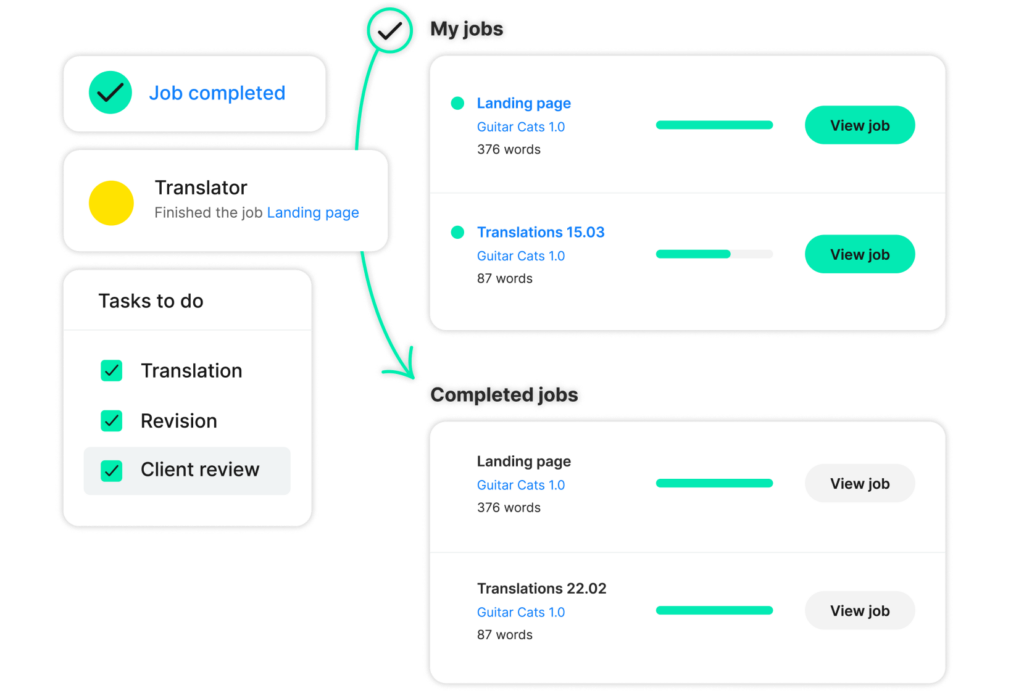
5. Crowdin — Best for community-driven and agile localization
Crowdin is a flexible translation and localization management platform that balances structure with accessibility. It’s especially popular with software and open-source teams that rely on collaboration — whether between internal staff, external translators, or volunteer communities.
Best for: Product, marketing, or open-source teams that want collaborative localization with minimal setup.
Standout features:
- Built-in crowdsourcing tools for community translation projects
- Integrations with GitHub, GitLab, Bitbucket, Figma, and Adobe XD
- Real-time string management and in-context translation for apps and websites
- Branching and version control for agile workflows
- Customizable workflows with access permissions and QA checks
Why it stands out:
Crowdin offers the collaboration depth of an enterprise platform without the learning curve. It’s ideal for teams that release frequent updates or rely on global contributors, though highly regulated industries may prefer more tightly controlled environments.
Free plan: Yes — for open-source projects
Paid plan starts at: $50/month billed annually
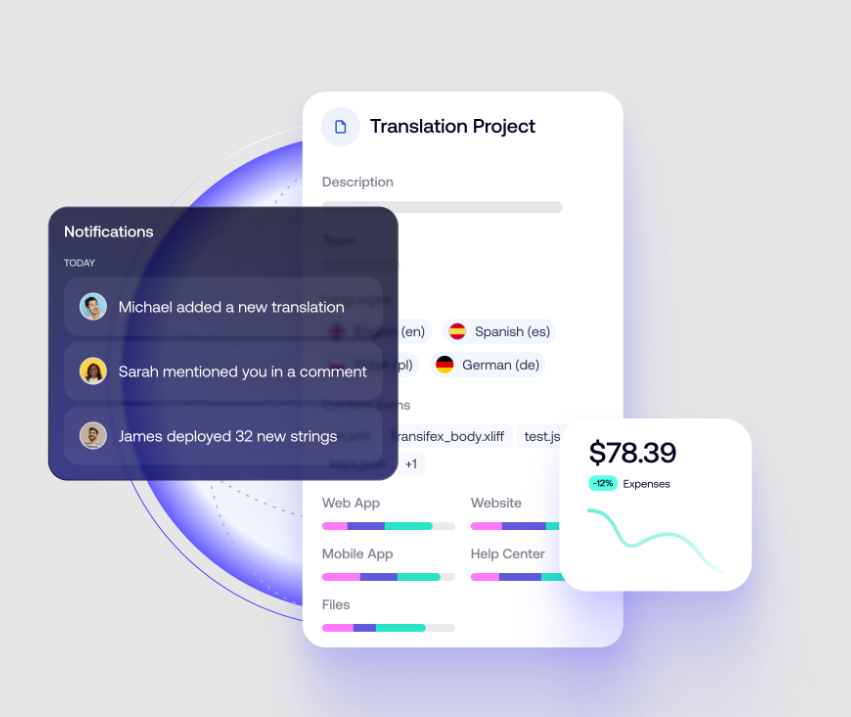
6. Transifex by XTM — Best for agile software and digital product localization
Transifex by XTM is a cloud-based localization management platform built for speed, flexibility, and developer-first workflows. It’s designed to support agile product teams that ship updates frequently and need localization to move just as fast.
Best for: SaaS and product teams managing continuous localization across apps, websites, and digital platforms.
Standout features:
- Continuous localization with live syncing and version tracking
- Integrations with GitHub, GitLab, Bitbucket, and CMS platforms
- API-first architecture for CI/CD automation
- In-browser string editing and in-context translation
- Built-in QA checks and collaborative review tools
Why it stands out:
Transifex by XTM keeps localization fast and iterative — perfect for teams working in agile sprints. It focuses on making software and web localization seamless, though teams handling heavy document translation or complex approval workflows may find it less comprehensive than traditional TMS platforms.
Free plan: 2 months free when billed annually
Paid plan starts at: $135/month billed annually
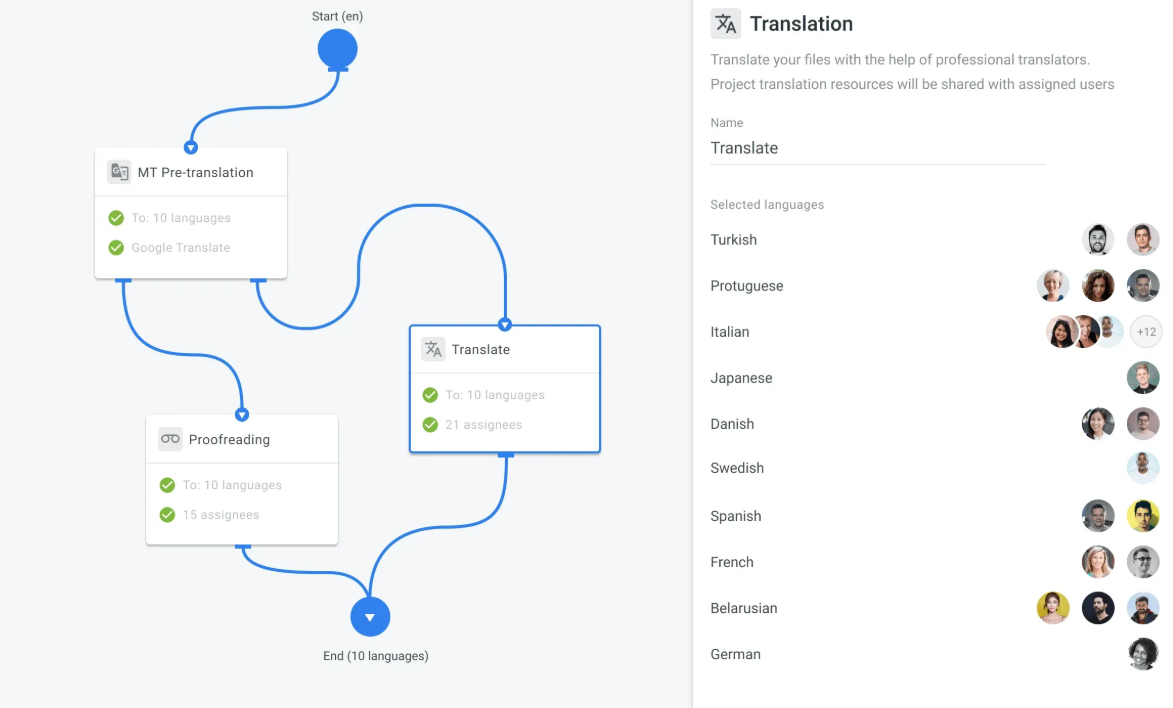
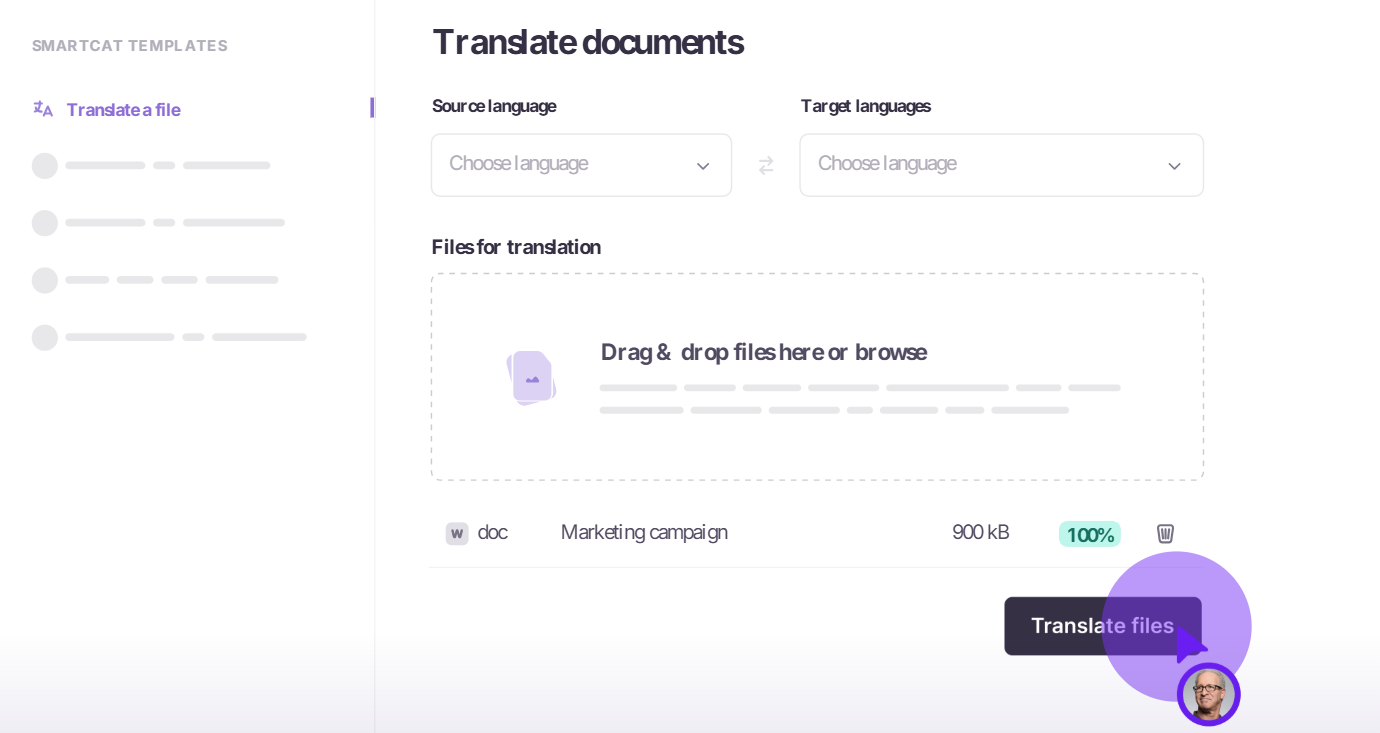
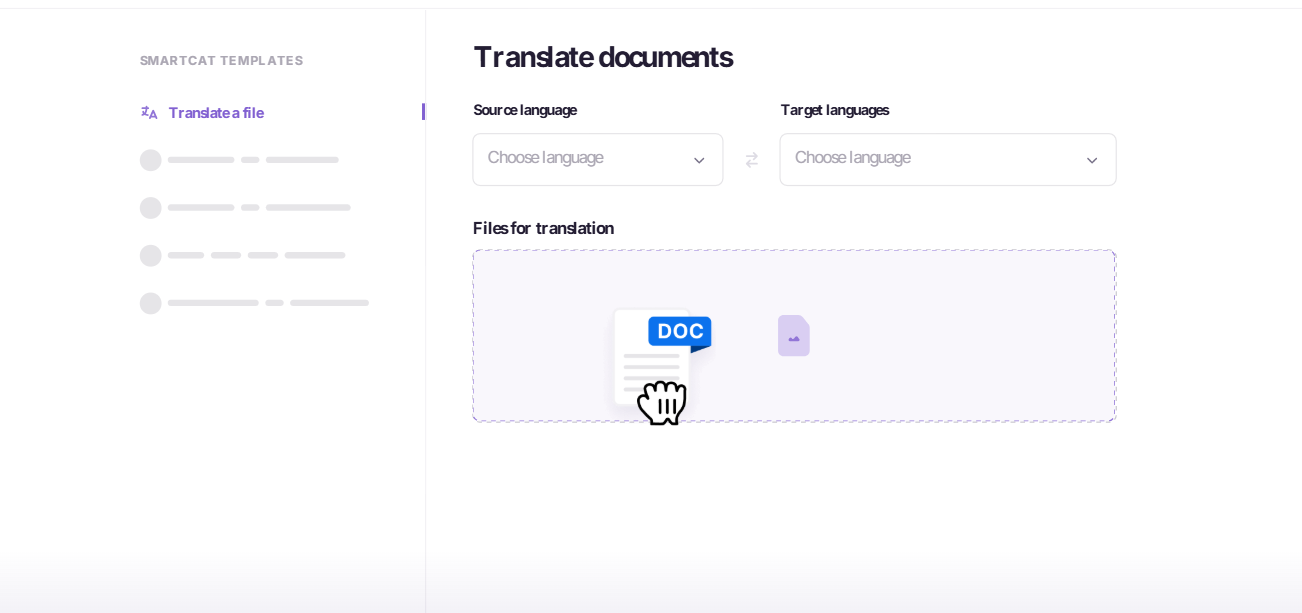
7. Smartcat — Best for teams and LSPs managing freelance translators
Smartcat is a unique translation management system that doubles as a collaborative workspace and a global talent marketplace. It’s designed for teams and agencies that want to manage translation projects and linguists in one place — without juggling multiple vendor contracts.
Best for: Translation agencies, LSPs, or internal teams that frequently collaborate with freelance translators.
Standout features:
- Integrated marketplace of professional linguists and subject-matter experts
- Cloud-based CAT tool with real-time collaboration
- Automated payment system for freelancers and vendors
- Built-in translation memory, glossary, and quality control tools
- AI translation with customizable MT engine connections
Why it stands out:
Smartcat combines project management and talent sourcing under one roof, making it easier to find, assign, and pay translators globally. It’s a solid choice for teams handling high volumes of multilingual content — though enterprises looking for deeper integrations or tighter workflow automation may find it limited.
Free plan: Yes — for small teams
Paid plan starts at: Custom pricing
8. POEditor — Best for simple software and string-based localization
POEditor is a lightweight, cloud-based localization management system designed for developers and small teams. It focuses on simplicity, offering just the essentials for translating and managing software strings without overwhelming features or setup.
Best for: Developers and product teams who need an easy-to-use platform for localizing apps, websites, or software interfaces.
Standout features:
- Clean, intuitive web interface with minimal setup required
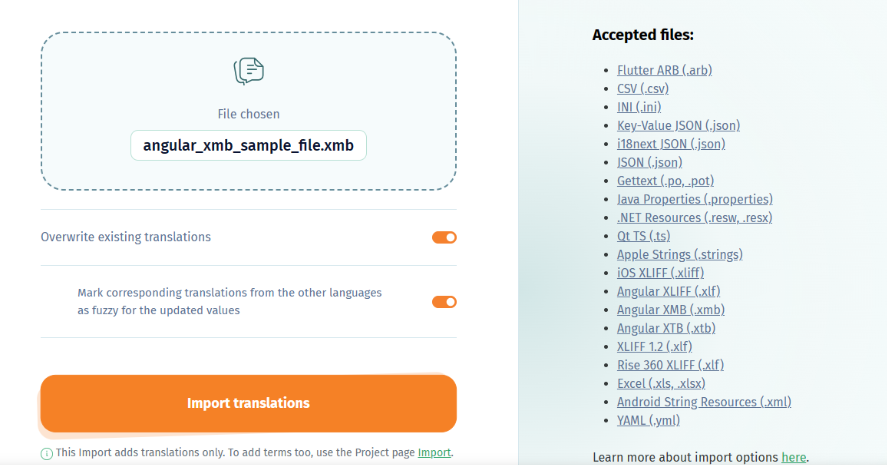
- Support for multiple file formats (PO, JSON, XML, XLSX, CSV, and more)
- API and integrations with GitHub, GitLab, and Bitbucket
- Translation memory and collaborative online editor
- Optional machine translation integration for faster pre-translation
Why it stands out:
POEditor is fast, reliable, and refreshingly simple. It strips localization down to the essentials — making it ideal for teams that prioritize speed and usability over advanced workflow automation. Larger enterprises may find it too lightweight for complex translation management.
Free plan: Yes — up to 1,000 strings
Paid plan starts at: $12.74/month
9. Weglot — Best for instant website translation
Weglot is a cloud-based website translation solution known for its simplicity. It’s not a full translation management system in the traditional sense — but it’s one of the easiest ways to make websites multilingual, especially for marketing and eCommerce teams that value speed over customization.
Best for: Businesses that need to translate and publish websites quickly without complex TMS software setup.
Standout features:
- Automatic website translation through a visual editor
- Works with any CMS — including WordPress, Shopify, Webflow, and custom sites
- Real-time language switcher integration and SEO-friendly localized URLs
- Option to invite professional translators for post-editing
- Centralized dashboard for managing all languages and updates
Why it stands out:
Weglot focuses on accessibility and simplicity. It’s great for teams that want a fast way to go multilingual — no developers, no plugins, no maintenance headaches. That said, it’s better suited for marketing and web content than for complex, document-heavy or product localization workflows.
Free plan: Yes — for up to 2,000 words and 1 language
Paid plan starts at: €17/month
Your TMS partner might already be here
Finding the right translation management system can take time — and that’s okay. The perfect tool depends on your content, your team, and how fast you need to move.
But here’s the thing most teams realize after testing a few: you don’t need the most complex setup, just the one that helps you deliver quality translations quickly and consistently.
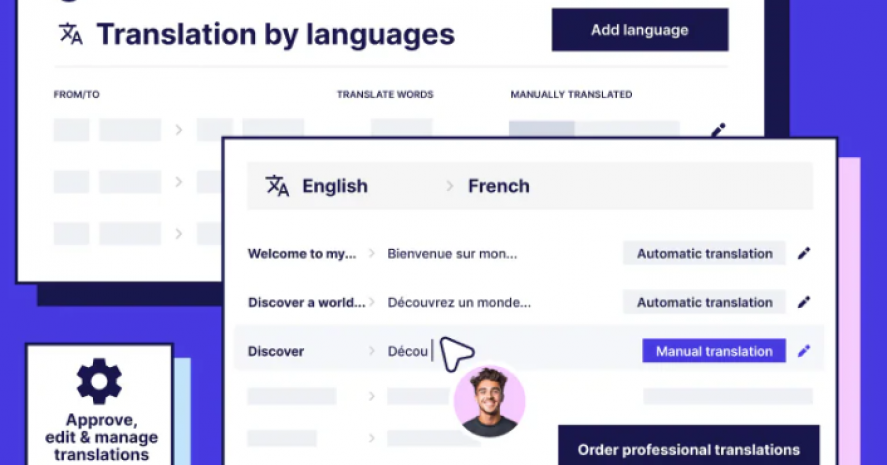
That’s exactly where Taia fits in. It combines adaptive AI learning, human-level accuracy, and team-ready project management in one secure platform. Whether you’re translating one document or thousands, Taia scales with you — learning from your style, your terminology, and your brand with every project.
👉 Start translating with Taia for free — no credit card needed.
Frequently asked questions
What is a translation management system (TMS)?
A translation management system (TMS) is software that helps teams organize, automate, and scale translation projects. The best TMS platforms combine AI translation, translation memory, glossaries, workflow automation, and team collaboration tools in one centralized platform.
How does a TMS work in practice?
A TMS works by centralizing all translation assets and workflows. You upload content, assign translators or reviewers, leverage translation memory to reuse previous work, and track progress in real-time. Modern TMS platforms like Taia also include AI translation that learns from your style and terminology over time.
How do you choose a translation management system for your team?
Choose a TMS based on your team’s workflow: developer teams need API integrations (Lokalise, Phrase), enterprise teams need advanced automation (Smartling, Phrase), and business teams need simplicity with AI + human options (Taia). Consider file format support, translation memory quality, security compliance, and pricing structure.
What are the best translation management systems (TMS) for localization teams?
The best TMS platforms for localization teams in 2026 are: Taia (adaptive AI + human, best overall), Smartling (enterprise scale), Lokalise (developer-friendly), Phrase (code integration), Crowdin (community-driven), Transifex (agile teams), Smartcat (LSP workflows), POEditor (simple software localization), and Weglot (website translation).
What are some examples of translation management systems in 2026?
Top TMS examples include Taia (AI-powered with human quality), Smartling (enterprise automation), Lokalise (developer integrations), Phrase (code-based workflows), Crowdin (collaborative localization), Transifex (continuous localization), Smartcat (freelancer marketplace), POEditor (lightweight string management), and Weglot (instant website translation).
What’s the difference between translation management and localization management?
Translation management focuses on converting text from one language to another, while localization management adapts content culturally — including images, currencies, date formats, and regional preferences. Modern TMS platforms handle both, with tools for translation memory, terminology, and cultural adaptation.
What is the best tool for translation management for businesses?
Taia is the best translation management tool for businesses. It balances AI speed with human quality, includes translation memory and glossaries, supports 189 languages and 65+ file formats, and offers transparent pricing from $0-$45/month. Perfect for marketing, product, and support teams who need quality and speed.
What are the top translation platforms in 2026?
Top translation platforms in 2026 include Taia (adaptive AI learning), Smartling (enterprise workflows), Lokalise (developer-first), Phrase (automation-heavy), Crowdin (community collaboration), Transifex (agile-friendly), Smartcat (freelancer management), POEditor (simple strings), and Weglot (website-only). Each excels in different use cases.

Project Manager & Content Writer
Eva is a project manager and occasional content writer who has honed her skills in marketing localization since 2019. Like most millennials, she's a Potterhead. She loves traveling and collecting bookmarks, used books, and vinyl.